
Every corner of a home relies on a handful of core functions. Heat keeps the household safe and comfortable through cold months, cooling removes heat and humidity when summer arrives, power runs every appliance and device, and protection keeps weather, pests, and hazards on the outside. Each of these functions depends on equipment and materials that age with every season of use. Furnaces log thousands of heating cycles, compressors and fans run for hours on hot afternoons, wiring carries steadily increasing loads, and the shell absorbs everything the weather delivers.
When one function weakens, the others feel the strain. Leaky ductwork forces heating and cooling equipment to work harder, overloaded circuits limit what the household can safely run, a failing flue turns a cozy fire into a hazard, and gaps in the shell let water and pests into the structure. Keeping every corner of the home heated, cooled, powered, and protected requires treating these systems as a coordinated whole. Seasonal inspections, timely repairs, and thoughtful upgrades keep each function working at full strength, giving the household dependable comfort and lasting peace of mind.
Assessing Decayed Trunks and Dismantling Overhanging Limbs

Protection begins well beyond the walls of the house. Mature specimens with internal decay can look healthy while fungi hollow out the heartwood that gives the trunk its strength. Cavities, fungal conks at the base, oozing cracks, and dead branches high in the crown signal weakening wood. Limbs stretching over the house scrape shingles, drop debris into drainage channels, and give squirrels and mice a bridge onto the eaves, while a decayed trunk can fail suddenly during wind or ice storms.
Professional local tree removal begins with an arborist’s assessment of decay, lean, and nearby targets, sometimes using resistance drilling to measure how much sound wood remains. Overhanging limbs are rigged and lowered with ropes and friction devices rather than dropped, protecting shingles, siding, and landscaping. When the trunk cannot be saved, crews dismantle it in controlled sections, using a crane where space is tight. Stumps are ground below grade, debris is chipped and hauled away, and the area is backfilled and seeded.
Sizing Matched Equipment and Sealing Leaky Ductwork
Heating and cooling equipment can only deliver comfort when it is sized for the home and paired with ductwork that carries air where it is needed. Oversized units short-cycle, wasting energy and leaving rooms clammy in summer and drafty in winter. Undersized units run constantly and still fall behind during extreme weather. Ducts with separated joints, crushed runs, and unsealed boots leak conditioned air into attics and crawlspaces, while leaky returns pull in dust and humid air.
Experienced local hvac companies begin with a Manual J load calculation that accounts for insulation, window performance, air leakage, and orientation, then select AHRI-matched indoor and outdoor components sized to the result. Ducts are tested for leakage and airflow is measured at each register. Joints, seams, and boot connections are sealed with water-based mastic or UL-181 foil tape, disconnected runs are reattached, attic ducts are insulated to at least R-8, and balancing dampers are adjusted so each room receives its designed airflow. Final static pressure readings confirm the blower is no longer straining against restrictive ductwork.
Restoring Refrigerant Charge and Replacing Weak Capacitors
Cooling capacity fades quietly as refrigerant escapes through small leaks in coils, fittings, or service valves. With less refrigerant circulating, the system absorbs less heat, runs longer cycles, and may freeze the indoor coil, leaving rooms warm and humid. Capacitors, which supply the electrical boost that starts and runs compressors and fan motors, weaken under heat and age. As their capacitance drops, motors struggle to start, overheat, and eventually fail, often on the hottest day of the year.
Dependable ac repair companies begin by measuring superheat and subcooling to confirm whether the charge is low, then locate leaks with electronic detectors, ultraviolet dye, or nitrogen pressure testing. Leaks are repaired by brazing under a nitrogen purge, and the system is evacuated below 500 microns before being recharged by weight. Run and start capacitors are tested against their rated microfarad values and replaced when weak or bulging, while contactors and wiring are inspected and the condenser coil is cleaned to restore efficient cooling.
Inspecting Heat Exchangers and Replacing Faulty Igniters
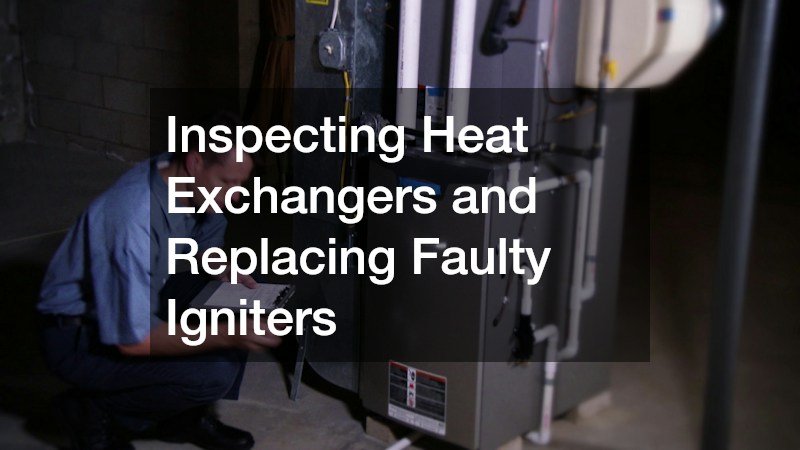
Gas heating equipment sits idle for months before being called on during the first cold snap, and problems that developed during the off-season appear all at once. Hot surface igniters become brittle and crack, leaving the burners unable to light, and flame sensors oxidize until they can no longer confirm a flame. More serious is a cracked heat exchanger, caused by years of heating and cooling cycles and often worsened by restricted airflow, which can allow carbon monoxide to enter the supply air.
A qualified furnace contractor begins with reading control board diagnostic codes and observing the ignition sequence, then inspects the heat exchanger with a camera and watches the flame for disturbance when the blower starts. A combustion analysis measures carbon monoxide, oxygen, and flue temperature. Cracked silicon carbide igniters are replaced with durable silicon nitride models, flame sensors are polished or replaced, burners are cleaned, and manifold gas pressure is set with a manometer. Carbon monoxide alarms are tested on every level of the home.
Replacing Storm-Damaged Shingles and Resealing Worn Flashing
The shell is the home’s primary line of protection against weather. Hail fractures the mat beneath the granules, wind lifts tabs and breaks their adhesive seals, and falling branches puncture the surface. Flashing at chimneys, sidewalls, skylights, and vents often fails first, as sealant dries out and metal pulls away from adjoining surfaces. Water entering at these points soaks decking and insulation, rots framing, and eventually stains ceilings below.
Professional roofing services begin with a detailed inspection after major storms, documenting damaged shingles and checking every penetration and transition. Fractured, creased, or missing shingles are replaced with matching material fastened with ring-shank nails and sealed in high-wind areas. Worn flashing is removed, new step flashing is woven course by course along sidewalls, chimney counterflashing is set into reglets cut into mortar joints, and pipe boots are replaced. Damaged decking is replaced, and attic ventilation is checked to keep the assembly dry.
Sweeping Creosote Deposits and Relining Cracked Flues
Fireplaces and wood stoves provide warmth and comfort, but every fire deposits soot and creosote on the walls of the flue. Over time, those deposits can harden into a glazed, highly flammable layer that ignites in a flue fire hot enough to crack masonry. Clay tile liners also fracture from thermal shock, opening gaps that let heat and combustion gases reach nearby framing. Animal nests and debris restrict draft, pushing smoke and carbon monoxide back into the living space.
Certified chimney services begin with a camera inspection to evaluate deposit levels and liner condition from the firebox to the top of the flue. Soot and flaky creosote are removed with rotary brushes and rods sized to the flue, while glazed deposits are treated with chemical modifiers before removal. Cracked clay liners are relined with insulated stainless steel sized to the appliance, restoring a continuous, code-compliant path for exhaust. A stainless steel cap with spark-arrestor mesh keeps out rain, animals, and debris.
Patching Cracked Shells and Restoring Failing Filtration Equipment
Backyard swim areas lose water and efficiency through problems that develop out of sight. Ground movement, freeze-thaw cycles, and age open hairline cracks in the shell, while seals around lights, returns, and skimmers shrink and separate. Escaping water washes away supporting soil and raises water, chemical, and heating costs. Filtration equipment wears just as steadily, with leaking pump seals, overheating motors, torn filter grids, and clogged cartridges leaving water cloudy and harder to sanitize.
Prompt pool repair begins with leak detection, using bucket tests, dye testing, and pressure testing of suction and return lines to locate every source of water loss. Structural cracks are chased out, stapled with steel reinforcement, and filled with hydraulic cement or epoxy before the interior finish is patched, and failed fitting gaskets are renewed. Filtration systems are restored by replacing pump seals and motors, rebuilding or replacing filters, and upgrading to variable-speed pumps that cut energy use while improving circulation. Balanced water chemistry afterward protects the repaired surfaces and equipment from premature wear.
Sealing Attic Entry Gaps and Trapping Nesting Mice
As temperatures drop, mice and rats look for warm shelter, and attics offer exactly what they need. They enter through gaps at soffits and fascia, damaged gable and ridge vent screens, openings around plumbing and electrical penetrations, and spaces where branches touch the eaves. Once inside, they shred insulation for nesting material, chew wiring, contaminate surfaces with droppings and urine, and create fire hazards when insulation on conductors is damaged.
Thorough rodent removal services begin with an inspection of the attic and exterior to identify entry points, runways, and nesting areas by tracking droppings, rub marks, and gnaw damage. Active populations are reduced with snap traps and secured bait stations placed along runways. Entry gaps are sealed with steel mesh, metal flashing, and durable sealants, and damaged vent screens are replaced with heavy-gauge hardware cloth. Contaminated insulation is removed, the attic is sanitized with enzyme-based cleaners, and new insulation restores thermal performance.
Tracing Hidden Leaks and Replacing Corroded Shutoff Valves
Supply lines run hidden through walls, floors, and slabs, and their failures often go unnoticed until damage is extensive. Pinhole leaks in copper, corroded galvanized pipe, and loose fittings soak framing and subfloors, feed mold, and raise water bills. Older multi-turn shutoff valves under sinks and toilets and at the main supply corrode and seize from mineral buildup, leaving homeowners unable to stop the flow when a leak finally appears.
Timely plumbing repairs begin with acoustic leak detection, thermal imaging, and isolation pressure tests that pinpoint failures before walls or floors are opened. Damaged sections are replaced with PEX-A tubing and cold-expansion fittings or Type L copper, rerouted through attics or interior walls where slabs are involved. Corroded shutoff valves are replaced with quarter-turn ball valves and braided stainless steel connectors, and the main shutoff is upgraded. A pressure-reducing valve and a smart leak detector with automatic shutoff add further protection.
Upgrading Outdated Panels and Adding Ground-Fault Protection
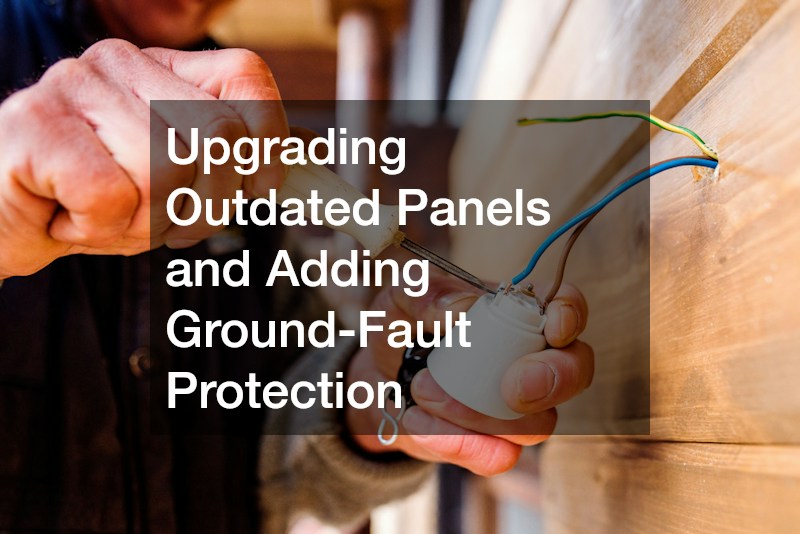
Power demands in modern homes have grown far beyond what many older panels were designed to handle. Heating and cooling equipment, kitchen appliances, home offices, and vehicle chargers place heavy loads on 60- or 100-amp panels, causing breakers to trip, conductors to overheat, and connections to loosen. Some legacy panel brands contain breakers that may fail to trip during faults, and many older homes lack ground-fault protection in wet and outdoor locations.
An experienced electrical contractor begins with a load calculation and thermal imaging scan of the panel to identify overloaded circuits and hot connections. Outdated panels are replaced with modern breaker panels, often upgraded to 200 amps with a new meter base, and circuits are rebalanced to distribute loads evenly. GFCI protection is added in kitchens, wet rooms, laundry areas, garages, basements, and outdoor locations, while AFCI breakers protect living spaces from arcing faults. Grounding and bonding are verified, and a whole-home surge protector shields sensitive equipment.
A home performs best when heat, cooling, power, and protection all work together. Properly sized and serviced heating and cooling equipment, sealed ductwork, and clean flues keep every room comfortable and safe. Modern electrical service powers daily life without strain. A sound shell, managed canopies, sealed attics, leak-free plumbing, and well-maintained outdoor features protect the structure from weather, pests, and water damage. When one function falls behind, the others are forced to compensate.
Keeping every corner of the home in top condition requires a steady routine. Spring and fall heating and cooling service, annual flue sweeping, periodic electrical evaluations, storm inspections of shingles and flashing, seasonal checks for pests, plumbing leak detection, and routine care of outdoor features catch problems early. Upgrading aging components before they fail prevents emergencies and keeps operating costs predictable.
The reward is a home that feels comfortable, safe, and dependable in every season. Rooms stay warm or cool as needed, power is reliable, and the structure remains protected for decades. By heating, cooling, powering, and protecting every corner of the home, homeowners create a place where the household can live with confidence year after year.