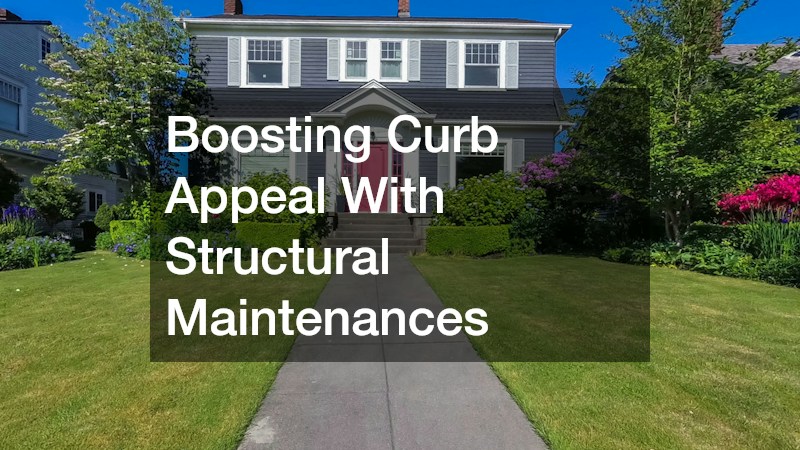
When most homeowners think about improving the exterior appearance of their property, their minds immediately jump cosmetic upgrades. The true, underlying foundation of exceptional and lasting curb appeal is rooted entirely in the structural integrity of the home and its surrounding property. Failing to address the bones of your exterior spaces can render even the most expensive cosmetic upgrades completely ineffective. Homeowners might not realize this, but the hidden costs of deferred maintenance are profound and can accumulate over time. Issues such as sagging property borders, which can occur due to shifting soil or improper drainage, fractured pathways that create tripping hazards, eroding soil which undermines plant roots and destabilizes foundational elements, and decaying exterior cladding, which fails to protect the home from weather, will instantly degrade a home’s perceived value. Such decay and neglect can deter potential buyers long before they ever step through the front door. Even the allure of a freshly painted front door cannot distract the eye from a crumbling walkway or a dangerously leaning retaining structure.
By shifting your focus to prioritize structural repairs and routine, preventative maintenance over superficial band-aids, you not only enhance the appearance but also secure the long-term health and safety of your home’s exterior. This approach involves regular inspections, timely repairs, and addressing small issues before they magnify into larger ones. By creating a lasting, high-end exterior that actively protects your financial investment, you ensure that the aesthetic improvements you make later, be it landscaping enhancements or decorative elements, will have a solid, healthy foundation to rest upon, thus ensuring that your home remains as valuable and inviting as possible for years to come.
Repair and Resurface the Primary Entry Path
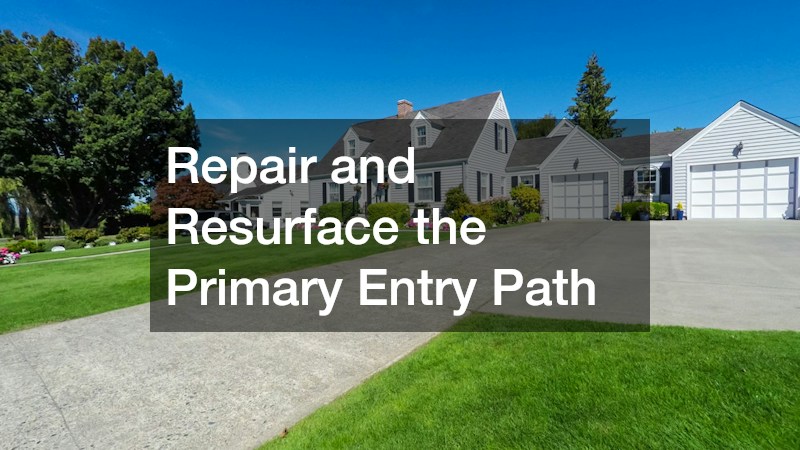
The very first physical interaction anyone has with your property is the approach. When the surfaces that guide guests from the street to your front door are compromised, it sets an immediate tone of neglect. Assessing and addressing surface fractures is the most critical first step. Water intrusion into tiny cracks, combined with the inevitable freeze-thaw cycles of changing seasons, acts like a wedge, expanding beneath the surface and causing large-scale structural failure.
To maintain a pristine approach, you must understand exactly how to manage these heavy-duty surfaces. When dealing with large paved areas, patching can sometimes suffice for hairline fissures, but extensive spiderweb cracking or severe heaving usually means that entirely resurfacing concrete driveways is the only way to restore a clean, uninterrupted, and structurally sound sightline from the street.
Sinking and settling are also major issues for entry paths. Here are the most effective ways to manage walkway structural integrity:
- Evaluate for trip hazards: Sinking walkways are often caused by poor initial soil compaction or subsequent erosion. These sunken slabs create pooling water that accelerates deterioration and forms dangerous ice patches in the winter.
- Consider leveling techniques: Before tearing out an entire walkway, look into mudjacking or polyurethane foam injection. These methods involve pumping material beneath the sunken slab to raise it back to its original, level position, which is often far more cost-effective than complete replacement.
- Address foundational mortars: The visual weight of your front steps, brick pillars, or stone entryways anchors the entire front yard. If the mortar between these bricks is turning to dust or falling out, water is penetrating the underlying structure.
- Repoint to prevent collapse: You must hire professional masonry services to grind out the failing, crumbling mortar and meticulously repoint the joints. Doing this before moisture can freeze and shatter the brick faces from the inside out is crucial for maintaining both the safety and the grand appearance of a masonry entrance.
Control Erosion and Define Sloped Areas
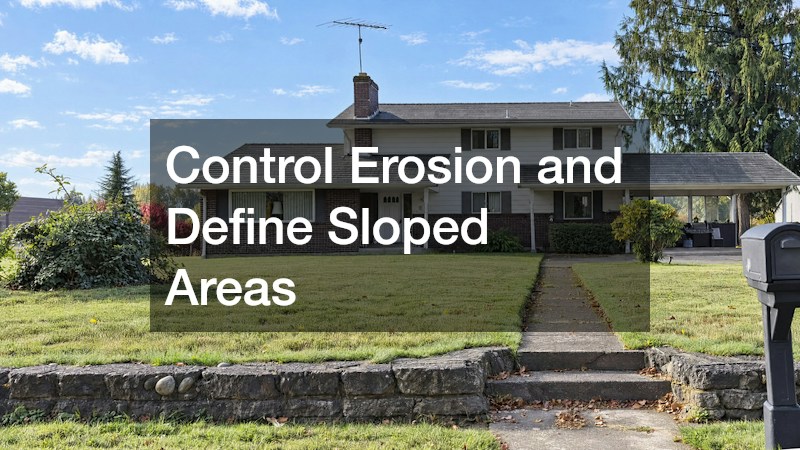
A property that lacks proper grading and soil stabilization will constantly fight a losing battle against the elements. Evaluating your property’s grading and drainage is a fundamental aspect of structural exterior maintenance. When soil slopes toward the home rather than away from it, or when heavy rains create concentrated runoff streams, the water strips away nutrient-rich topsoil, leaves unsightly mud channels across the yard, and ultimately threatens the foundation of the house with severe hydrostatic pressure.
To combat this, homeowners must proactively manage how water and gravity interact with their landscape. Installing French drains, catch basins, or dry creek beds can safely redirect surface water away from vulnerable areas. However, when dealing with significant elevation changes, more robust structural interventions are required to keep the property intact and visually appealing.
- Mitigate hillside erosion: A steep, eroding slope is an eyesore that is nearly impossible to mow or plant effectively. By excavating and constructing a durable retaining wall, you can transform a problematic, washing-away hillside into a highly structured, usable, and level planting tier. This immediate architectural intervention catches the eye and adds massive structural appeal.
- Incorporate adequate drainage: Any structure holding back tons of wet soil must feature proper backfill, weep holes, and drainage pipes. Without these structural considerations, the built-up hydrostatic pressure will eventually cause the structure to bow and collapse.
- Establish permanent borders: A well-defined yard looks intentionally designed. Utilizing professional hardscaping services to install built-in stone garden borders, permanent pathway edging, or cobblestone aprons creates clean, immovable lines throughout the property.
- Reduce seasonal labor: Unlike plastic edging that heaves in the winter or trench edges that must be re-cut every spring, these permanent stone and concrete fixtures require zero seasonal maintenance, ensuring the yard maintains a crisp, structured appearance year-round regardless of the weather.
Secure the Perimeter and Manage Overgrowth
The boundaries of your property frame the entire visual presentation of your home. When these borders are poorly maintained, the resulting visual chaos spills over into how the rest of the home is perceived. Realigning and reinforcing property lines should be a top priority for any homeowner looking to boost structural curb appeal. A perimeter enclosure with leaning posts, rotting wooden pickets, or sagging gates makes the entire property look severely neglected and structurally compromised.
When upgrading or replacing these boundary markers, the structural integrity of the installation process dictates the longevity of the final product. Setting wooden or metal posts properly is the most vital step in a new fence installation, as posts must be buried deep below the regional frost line and anchored in bell-shaped concrete footings to guarantee long-term stability against high winds and shifting, freezing soils.
Beyond the manufactured borders, the natural canopy of your property plays a massive role in structural aesthetics. Overgrown vegetation can consume a house, hiding its best architectural features in deep shade and creating a damp environment that promotes exterior rot.
- Clear architectural sightlines: Overgrown canopy limbs and low-hanging branches cast gloomy, uninviting shadows over the property. Selectively thinning the canopy allows natural sunlight to wash over the home’s exterior, immediately brightening the facade and making the yard feel significantly larger and more welcoming.
- Identify overhead hazards: Dead, diseased, or massive overhanging branches pose a severe structural threat to your roofline, gutters, and windows during heavy storms or high winds.
- Engage in preventative arboriculture: Utilizing expert tree services to safely crown, thin, and cable large, mature oaks, maples, or pines ensures that these massive natural structures remain healthy and safe. Proper pruning cuts prevent disease and rot from entering the trunk, preserving the majestic appeal of mature trees without risking the structural safety of the home beneath them.
Wash, Repair, or Replace the Home’s Protective Shell
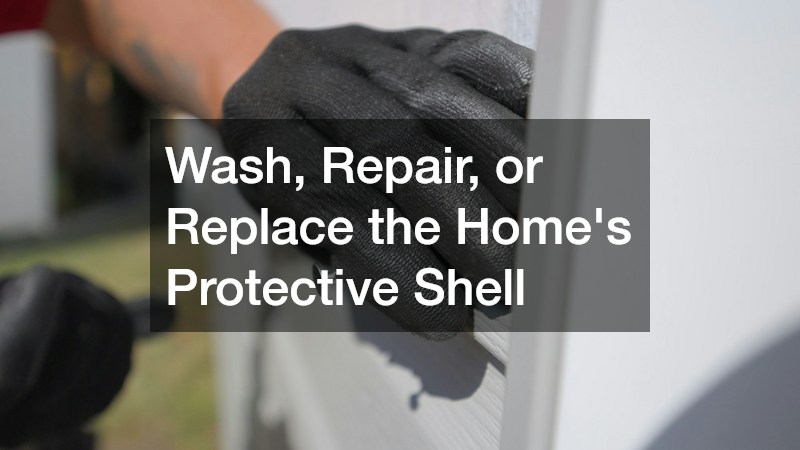
The exterior cladding of your house is its primary defense against the elements. If this protective envelope is compromised, no amount of landscaping can compensate for the structural decay occurring beneath the surface. Auditing the exterior envelope of your home should be an annual structural maintenance routine. Homeowners must meticulously walk the perimeter, inspecting the cladding for subtle signs of warping, deep wood rot, failing caulking joints, or trapped moisture that causes exterior paint to blister and peel away in large sheets.
When the structural integrity of the exterior panels is gone, painting over the problem is a waste of time and money. Upgrading deteriorating materials is the only permanent solution. Bringing in a reliable siding company to strip away rotting wood lap or cracked, fading vinyl and replace it with modern, durable materials like fiber cement or engineered wood instantly refreshes the home’s color palette while entirely resetting the clock on the building’s structural weatherproofing.
Attached outdoor living structures also contribute heavily to the overall structural curb appeal. Because these extensions project outward, they are often the most exposed elements of the home’s architecture.
- Inspect transition zones: Pay close attention to the areas where different materials meet, such as the flashing around windows, the sealant where the deck ledger board meets the house, and the trim around garage doors. These are the most common failure points for water intrusion.
- Maintain enclosed structures: If your home features an extended architectural element visible from the street, such as a prominent, glass-enclosed sunroom or a screened-in front porch, structural upkeep is vital. A dilapidated attached structure drags down the entire property.
- Focus on seals and framing: For these attached features, regularly inspect the structural framing for water damage, replace failing thermal seals around large glass panes to prevent foggy condensation build-up, and ensure the independent roof structure is properly integrated into the main house to prevent leaks and a sagging, neglected appearance.
Optimize Soil Health and Organize Plant Layouts
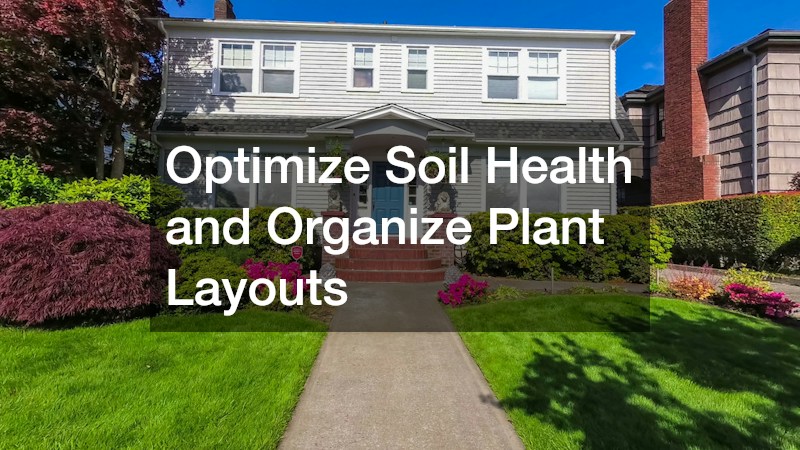
While plants and grass are biological organisms, their success and visual impact rely entirely on how well their structural environment is managed. A patchy, weed-infested lawn with compacted soil detracts significantly from a home’s exterior appeal. Rebuilding the turf foundation requires shifting the focus away from simply mowing the grass and moving toward comprehensive structural root maintenance.
When soil becomes heavily compacted from foot traffic and heavy rainfall, roots cannot penetrate deeply, and oxygen cannot reach the microbial life necessary for healthy dirt. Implementing core aeration to physically pull plugs of dirt out of the ground, dethatching to remove suffocating dead matter, and topdressing with nutrient-dense compost are all essential lawn care practices that physically alter the structure of the soil to create a thick, resilient, and weed-resistant carpet of green.
Just as the soil needs structural planning, so does the layout of the plants themselves. Failing to plan for the structural realities of mature root systems is a common and expensive mistake.
- Understand mature dimensions: Planting small, aggressive saplings or rapidly expanding shrubs too close to concrete pathways, retaining structures, or the home’s foundational walls will eventually result in cracked concrete, compromised masonry, and structural water intrusion as the roots seek out moisture and physical space.
- Layer the visual presentation: Structuring the botanical layout involves placing the tallest, most permanent elements in the back and layering downward toward the street. This creates an organized, visually deep presentation that highlights rather than obscures the home.
- Consult with layout experts: Achieving this balance of scale, root management, and seasonal interest is complex. Consulting with experienced landscape designers can provide you with a master architectural blueprint for your yard, ensuring you utilize structural evergreens for year-round presence and guarantee that mature plant sizes won’t eventually overgrow the home’s windows or obstruct the primary entry pathways.
Addressing the foundational and structural elements of your property’s exterior is an intensive process, but it is the only way to achieve truly spectacular and long-lasting results. Structural maintenance serves as the invisible skeleton that makes all subsequent cosmetic curb appeal efforts possible and sustainable. Without leveled concrete, stable soil, secure borders, a waterproofed exterior shell, and healthy soil architecture, surface-level decorations will rapidly deteriorate, forcing you into a continuous, exhausting cycle of temporary repairs.
Take the time to walk your property this coming weekend with a critical eye and a notepad. Force yourself to look entirely past the blooming flowers and the color of the front door. Instead, rigorously evaluate the condition of the concrete slabs, the wooden fences, the stone walls, and the exterior cladding. Document every crack, sag, and sign of rot. Prioritizing these foundational fixes ensures that your property commands deep, lasting attention from the street while providing the ultimate peace of mind that your home remains thoroughly shielded from the relentless elements.